Perspective
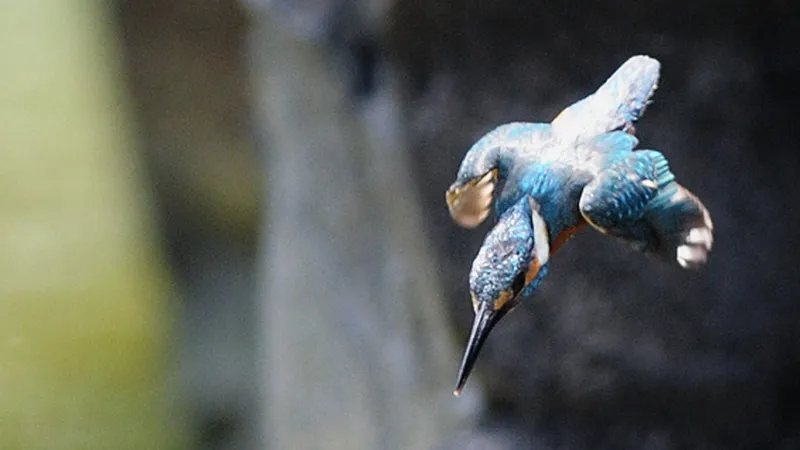
The bullet train and the kingfisher: a true story we keep telling wrong
Everyone tells this story with one bird, one flash of insight, and no receipts. Here is what actually happened, checked against the sources.
We map how work really happens, then redesign the workflows, knowledge and automation around it, so teams carry less weight and keep their judgment. Sustainable by default, and measured.
No website yet? Tell us about your project
Podologie Chodan, our first project. Measured with public tools.
What we do
Systems thinking
Before anything gets built, we map how your business actually runs. Where are people doing work a script could own? Where does the handoff drop the ball? Where is knowledge stuck in one person's head? Every project starts with those questions.
Human-AI systems
Workflow redesign, knowledge and decision flow, automation and AI architecture, with clear limits on what AI does and what stays human. Websites and apps are one way we build it, not the only way. We lead the work and bring in vetted specialists from our network when the scope calls for it.
Sustainable by default
Low-carbon and high-performance from the first line of code. Our first client site measures 0.09g CO₂ per visit, cleaner than 83% of pages WebsiteCarbon.com has tested (Sept 2026). Not a sustainability layer bolted on at the end. The way we build.
One constraint we design around
The internet now accounts for roughly 4% of global CO₂ emissions, more than every commercial flight in the world combined (The Shift Project, 2019). The number keeps climbing, and most businesses have never measured what their own corner of it costs.
The average web page emits about 0.36g of CO₂ per visit. At 10,000 visits a month, that's around 43kg a year (WebsiteCarbon.com, checked October 2026).
Bloated sites push users away, sink in search rankings, and cost more to host every month. Page weight and carbon travel together. So do bounce rate and lost revenue.
A green badge on a 5MB page that takes four seconds to load on a phone fools nobody. Customers, regulators, and procurement teams are all getting better at spotting the gap.
Our approach
We look at the whole system, not just the thing you're shipping. How it connects to your operations, your users, and the energy grid. Your growth and your footprint don't have to fight each other.
Sustainability work has a gatekeeping problem. We don't play that game. We meet you where you are, explain what we see in plain language, and move forward without lecturing anyone.
Constraints make better design. We bring in tools and automation when they cut waste and make real things easier. Not to look clever, and never just because they're new.
Real results
Podologie Chodan is a podiatry practice in Forst, Germany. It had no website or online presence, and as far as we know, no local competitor had a website either. We built from scratch in four weeks: fast and clean, with no old site to fix. Patients now contact the practice through it. It runs on Framer for now, and a move to green hosting is planned.
Sustainability
0.09g CO₂
Performance
97/100
Mobile, 100/100 on desktop (PageSpeed Insights, Sept 2026)
Conversion
10.5%
About 1 in 10 sessions ended in a click on "Contact us"

Where to start
Your website is the part of your system anyone can measure from outside, so that's where we start. We grade it on five dimensions, check whether AI assistants can read it, and where it runs a real process, we map that too.
See what the audit covers
About the studio
I'm Adrianna, and I started The Trinity Tribe because sustainability kept getting bolted on as an afterthought. A green badge here, a leaf icon there, while the digital products underneath kept burning through energy and user attention. Today the same question goes further: how should work itself run when AI is part of the team?
We work from a single principle, Living System Design. Every decision, from font choice to server location, gets tested against one question: does this serve the people using it without costing the planet more than it gives back? When a project needs depth we don't have in-house, we bring in the right specialist for the work.
We run Living System Design on ourselves first, in our own studio, and we say so where something is still an experiment. We also use AI agents to draft and polish much of what we publish, working from our real project records. Adrianna reviews everything before it goes live.
A studio and lab for better ways of working.
How we work together
The audit is a fixed €500. The build prices below are starting points: we set the real scope and price once we see how your system runs and what needs to change.
We measure before we build, so the project is aimed at what actually needs fixing rather than what looks obvious.
Then we build
Audit fee credited. Final price set by scope.
Included
Best fitFounders and growing teams building their first serious digital system without taking on the weight of an internal team.
OutcomeA launch-ready site, app, or automation, with cleaner infrastructure, automation built in, and ownership docs you can use long after handover.
Custom scope. Set once we understand your system.
Included
Best fitOrganisations with multiple teams, workflows, or systems that need coordinated delivery.
OutcomeA full-spectrum delivery partner, carbon data for your ESG reporting, and a clear path for post-launch stewardship.
Common questions
Living System Design is how we design work and digital products so they behave like healthy ecosystems: efficient, connected, and self-sustaining. Instead of treating a website or a workflow as a one-off deliverable, we map the whole system, including people, knowledge, workflows, data, and environmental footprint. The result performs better, costs less to run, and comes with a measured carbon footprint you can check.
Solarpunk rejects the idea that good technology and a healthy planet are in conflict. For us, every decision, from which task to automate to where a server runs, gets weighed against what it saves people and what it costs the planet. A solarpunk system isn't one that looks green. It's one where we measure the footprint with public tools like WebsiteCarbon.com and publish the numbers.
Pioneer projects (from €4,500) usually run four to eight weeks from audit to handover, depending on scope. Visionary projects (from €12,000) run ten to sixteen weeks and pull in a specialist team. Projects for an existing website start with the Living System Audit, which fixes the scope, timeline, and price before any build begins.
If you already have a website, yes. The audit is how we see your system before we build anything for it, and the €500 is credited in full toward your project. No website yet? Then there's nothing to measure. Tell us about your project through the intake form, and we'll follow up with a few questions, by email or on a short call, before we scope the build.
Honestly, no. A fixed quote without seeing the system is either padded with a hefty risk buffer or based on a guess. If you have a website, the audit gives you a precise proposal with a defined scope. If you don't, we ask our questions first. Either way, you know exactly what you're getting before you commit to a build.
A measured baseline of your site across five dimensions: digital footprint, performance and UX, accessibility, claim-safety, and security. We also check whether AI assistants can read your site and whether any AI on it is disclosed. Where your site runs a real process, you get a map of it and where automation would help. Then a written report you can act on, and a scoped proposal, whether or not you decide to keep working with us.
Revision rounds are scoped in the proposal and depend on the tier. After launch, Pioneer projects come with a structured handover and documentation, so you can run the product on your own with confidence. Visionary projects can include a Stewardship retainer for ongoing system work. We don't disappear at delivery.
Adrianna shapes every project and reviews everything before it ships. Most of the build is done by AI agents working under her direction, inside the same studio system we use on ourselves. When a project needs human depth they can't cover, we bring in specialists from our network. You get one accountable person, without the overhead of a large agency.
Mostly direct clients, because that's where we can shape the full system. We're selective about agency partnerships and white-label work. If you're an agency looking to add measured, sustainable output to your offering, send us a message through the intake form.
Work with us
We're a small studio. We take on a limited number of projects at a time and we're picky about which ones. The application takes about five minutes.